Guides
Cold Plunge vs Ice Bath: Practical Differences
Cold plunge tubs and ice baths aren't the same thing. Here's what research says about temperature, cost, and which setup actually fits your routine.
Disclosure: We earn a commission if you buy through links on this page, at no extra cost to you. We only recommend gear we've tested or researched in depth. How this works.
The Cold Pod Cold Plunge Tub: 85 Gal Round Tub with Full-Wrap UV-Reflective Insulation Cover Bundle for Indoor & Outdoors Use - Portable Ice Bath Tub for Athletes & Crossfitters & Wim Hof Enthusiasts
Best for: Best overall portable cold plunge tub for regular home use
The most complete portable option under $200 as of July 2025. The included insulation cover is a genuine differentiator. Not for anyone wanting chilled-water precision, but for 2–5 sessions per week it covers the bases.
- Full-wrap UV-reflective insulation cover included, not sold separately
- 85-gallon round design fits most adults fully submerged
- Strong review base (1,000+ ratings) at this price tier
- Insulated walls meaningfully slow temperature drift
- No chiller — still requires ice or cold tap water
- Higher upfront cost than budget inflatables
- Round shape less ergonomic than oval for extended sessions
Bubplay Ice Bath Cold Plunge Tub with Cover for Indoor Outdoor for Recovery, Cold Water Therapy, Athletes & Adults - 105 Gallons, Black, XL
Best for: Budget entry point for first-time cold plungers
The right call if you want to try cold immersion without committing real money. Don't expect it to outlast a more structured tub past month three or four of weekly use.
- Exceptional value at under $45 for 105 gallons
- XL size accommodates taller users with room for shoulder immersion
- Cover included
- 4.3 stars across 739+ reviews is solid for this price
- Soft-sided inflatable — requires careful handling to avoid punctures
- Durability over many months is less proven than rigid options
- Setup requires inflation each time unless left assembled
The Cold Pod Ice Bath Tub for Athletes XL: Cold Plunge Tub Outdoor with Cover, 116 Gallons Portable Ice Bath Cold Water Therapy Plunge Pool, Large Ice Tub for Cold Dippers at Home
Best for: Mid-range buyers wanting more volume than the round Cold Pod
A solid middle ground for taller users or anyone wanting maximum volume at under $120 as of July 2025. The Cold Pod brand's track record across its lineup inspires reasonable confidence.
- 116 gallons — the largest Cold Pod portable model
- Cover included
- Same brand build quality as the round model at a lower price
- Owners consistently report good shape retention over repeated use
- Slightly lower rating (4.2) than its sibling model
- Still requires ice or cold water — no active chilling
- Fewer insulation layers than the CalmMax
BINYUAN XL Ice Bath Tub for Athletes With Cover 99 Gal Cold Plunge Tub for Recovery, Multiple Layered Portable Ice Bath Plunge Pool Suitable for Gardens, Gyms and Other Cold Water Therapy Training
Best for: Budget buyers who want better insulation than a single-wall inflatable
The insulation advantage over the Bubplay is meaningful for anyone trying to hold temperature through longer sessions. The Bubplay has more volume; the BINYUAN has better heat retention — which matters more depends on your sessions.
- Multi-layer construction slows heat transfer better than single-wall designs
- 99-gallon capacity with cover included
- Under $50
- 4.3 stars across 454 reviews
- Less volume than the Bubplay at a slightly higher price
- Multi-layer walls add thickness but not rigidity — still a soft-sided tub
- Less brand visibility than Cold Pod
CalmMax Oval Ice Bath Tub with Lid for Athletes 492L Portable Cold Plunge Tub for Cold Water Therapy 5 Layers Ice Baths at Home Outdoor Gym - 105cm Long
Best for: Taller users and anyone wanting an ergonomic oval shape with strong insulation
The five-layer insulation and oval ergonomics make this the best choice for longer sessions. The lower review count and brand obscurity are fair concerns; the specs and ratings are both strong.
- Oval shape is more comfortable for extended seated sessions than round
- Five insulation layers — most in this group
- 492L (~130 gal) is generous capacity
- Lid included
- Review count (346) is lower than comparable options
- Brand is less established than Cold Pod — warranty support is an open question
- Oval footprint requires more floor space than round tubs
Bio Ouster 3in1 Weekly Cold Plunge Water Treatment - Cleaner, Clarifier, and Softener for Cold Plunge and Ice Bath - Water Stabilizer for Fresh, Crystal Clear Water - Made in USA (32oz)
Best for: Anyone keeping water in a portable tub between sessions
Not optional if you're leaving water in your tub. Owners consistently report water quality degrades fast without treatment, especially in warm weather. Buy this alongside whichever tub you choose.
- Three-function formula (cleaner, clarifier, softener) in one product
- Specifically formulated for cold plunge temperatures
- Highest rating in this group at 4.5 stars across 500+ reviews
- Made in USA
- Ongoing consumable cost (~$30 per bottle as of July 2025)
- Not needed if you drain and refill after every single session
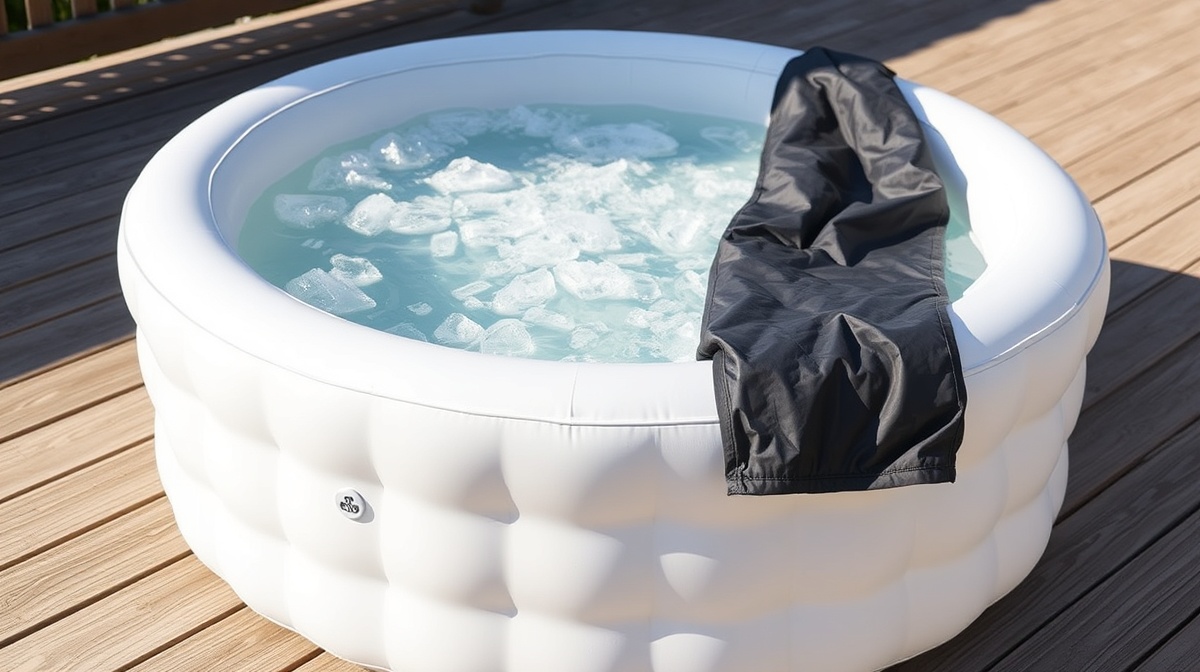
The core difference is repeatability, not temperature. A dedicated cold plunge tub holds a fixed water volume, often insulated, sometimes chilled by a refrigeration unit. An ice bath is a method — fill a vessel, use it, drain it. Both put your body in cold water. The experience, the cost, and the commitment behind each are genuinely different.
What the Terms Actually Mean
“Cold plunge” has become a marketing umbrella for everything from $40 inflatables to $5,000 refrigerated units. Technically, cold-water immersion (CWI) means submerging the body in cold water — usually after exercise. The Mayo Clinic Health System describes it simply as “partially or totally submerging yourself in cold water for a few minutes at a time,” without drawing any hard line between purpose-built tubs and improvised setups.
The temperature ranges people cite don’t help clarify things. Some sources distinguish plunge tubs from ice baths by temperature, but the ranges cited in the literature overlap so heavily the distinction is mostly noise. What actually matters is the temperature you achieve and hold — and that’s where equipment starts to matter.
Temperature: Holding It vs. Chasing It
An ice bath drifts. You start cold, your body warms the water, and without adding more ice you’re sitting in something approaching tepid by the end of the session. Research on CWI typically targets 10–15°C (50–59°F); a 2021 systematic review in the Journal of Sports Sciences found that range was most commonly used across recovery studies, with immersion times of 10–20 minutes. Holding that band in a bathtub full of melting ice is harder than it sounds.
A chilled plunge tub — one with a refrigeration unit — holds temperature precisely. A simple insulated tub without a chiller still loses heat more slowly than an uninsulated bathtub or stock tank, but it doesn’t actively cool anything. It just slows the drift. If you’re plunging daily, a chiller matters far more than if you’re going twice a week after hard training.
What the Research Suggests
The published evidence on cold-water immersion cuts in two directions at once, and both directions matter.
Muscle soreness. A Cochrane review of 17 trials found that CWI reduced delayed-onset muscle soreness (DOMS) compared to passive rest. The authors flagged that most studies were small with wide variation in methodology — a modest, qualified benefit, not a slam dunk.
Interference with adaptation. A 2019 study by Fyfe et al. in the Journal of Physiology found that post-exercise cold-water immersion may blunt some strength adaptations over time by suppressing anabolic signaling. In plain terms: research suggests cold immersion right after lifting may interfere with muscle growth if done chronically. Endurance athletes or anyone prioritizing soreness reduction over hypertrophy have a different calculus than someone training specifically for strength. Knowing which camp you’re in should shape how you use CWI — or whether you use it at all.
Mood and focus. The Cleveland Clinic notes that cold plunges “may help heighten focus” and that some users report improved mood, attributing part of this to cold-induced norepinephrine release. They also flag cardiovascular risks and recommend physician consultation before starting — particularly for anyone with heart conditions, high blood pressure, or circulatory issues.
CWI produces real physiological effects. It is not a cure or treatment for anything, and nothing in this article constitutes medical advice. Its recovery benefits are supported but limited in scope; its potential to blunt hypertrophy is also supported by research, and for anyone doing serious strength training, that tradeoff deserves more weight than the marketing usually gives it.
Cost: The Real Gap
An ice bath using a bathtub or cheap stock tank costs almost nothing upfront. The ongoing expense is ice — roughly 10–20 lbs per session depending on tub size and starting tap water temperature. At typical grocery or convenience store prices, that can run approximately $3–8 per session. Four sessions a week and ongoing ice costs add up quickly.
A portable plunge tub (no chiller) runs $40–180 based on current Amazon listings (as of July 2025). You still need ice or cold tap water to get it cold, but insulated walls slow temperature loss. One-time cost, minimal ongoing expense — assuming your tap water runs cold enough.
A chilled plunge tub from brands like Plunge, Ice Barrel, or Morozko starts around $1,000–5,000+ for units with refrigeration. You pay upfront, then electricity. No ice runs. Consistent temperature every session.
For anyone plunging three or more times a week, the math may tilt toward a dedicated tub fairly quickly. A portable insulated tub can offset ongoing ice costs within a relatively short period, depending on usage frequency and local ice prices.
Portable Tubs Worth Considering
The products below are drawn from verified Amazon listings. Ratings and prices are as of July 2025 and subject to change. None of this is medical advice — it’s product research.
Best Overall Value: The Cold Pod Cold Plunge Tub (85 Gal Round)
The included full-wrap UV-reflective insulation cover is what separates this from the cheaper options — it’s bundled, not an add-on. At $179.99 as of July 2025, the 85-gallon round design fits most adults fully submerged. Owners consistently report the cover meaningfully slows temperature drift both during and between sessions. At 4.3 stars across 1,000+ reviews, the feedback volume at this price point is a genuine signal. Not for anyone wanting a chilled unit or a permanent installation, but for 2–5 sessions per week it covers the bases.
Budget Entry: Bubplay Ice Bath Cold Plunge Tub (105 Gal)
4.3 stars across 739 reviews — reasonable, for a $42.99 inflatable as of July 2025. The XL size helps taller users get actual shoulder immersion, which volume-constrained round tubs sometimes can’t deliver. The honest concern is durability: owners note it’s soft-sided, so puncture risk with careless handling is real. The question isn’t whether it works on day one — it’s whether it holds up past month three or four of weekly use. If you’re testing the practice before spending real money, the entry cost is low enough to absorb that uncertainty. Don’t expect it to outlast a more structured tub.
Mid-Range: The Cold Pod Ice Bath Tub XL (116 Gal)
At $111.51 as of July 2025, this delivers more volume than the round Cold Pod model at a lower price — a genuinely useful tradeoff. Cover included, same brand build quality, and owners report good shape retention over repeated use, which is the key durability question for any portable tub. Rated 4.2 stars across 517 reviews, slightly behind its sibling but not by a meaningful margin. The pick for taller users or anyone who wants maximum capacity without crossing the $120 line.
Best for Longer Sessions: BINYUAN XL Ice Bath Tub (99 Gal)
The multi-layer construction is the whole argument for this one. More insulation than a single-wall inflatable means the water holds temperature longer — which matters specifically if you’re targeting the longer end of the 10–20 minute protocol range studied in the Journal of Sports Sciences review. At $49.99 as of July 2025 and 4.3 stars across 454 reviews, it’s a modest premium over the Bubplay. The Bubplay has more volume; the BINYUAN has better heat retention. Which matters more depends on your sessions.
Don’t Overlook: CalmMax Oval Ice Bath Tub (492L / ~130 Gal)
$75.99 as of July 2025 for a five-layer oval tub with lid. Five insulation layers is the highest count in this group. The oval shape is the other differentiator — sitting with legs extended is simply more comfortable for longer sessions than the tucked position most round tubs force. Rated 4.3 stars across 346 reviews. The lower review count is the only real pause here; the specs and rating are both strong, and the brand’s relative obscurity is a fair concern for anyone worried about warranty support down the line.
Water Treatment: Bio Ouster 3-in-1 Weekly Cold Plunge Treatment
$29.97 as of July 2025 for a 32 oz bottle. If you’re keeping water in your tub for days or weeks — as most portable tub owners do — skipping water treatment is how you end up with murky, unpleasant water within a week, especially in warm climates. Owners flag this consistently. This cleaner/clarifier/softener combination is formulated specifically for cold plunge temperatures, made in the USA, and rated 4.5 stars across 502 reviews — the highest rating in this group. Buy it alongside whichever tub you choose.
Ice Bath vs. Cold Plunge: A Direct Comparison
| Factor | Ice Bath (DIY) | Portable Plunge Tub | Chilled Plunge Tub |
|---|---|---|---|
| Upfront cost | ~$0–$50 | $40–$180 | $1,000–$5,000+ |
| Ongoing cost | Ice per session | Ice or cold tap | Electricity only |
| Temperature control | Poor (drifts) | Moderate (slows drift) | Excellent |
| Consistency | Low | Moderate | High |
| Best for | Occasional use | Regular home use | Daily / serious use |
Prices as of July 2025 and subject to change.
Who Should Use Which
Ice baths (DIY) make sense if you’re testing the practice, your sessions are irregular, or you already own a large tub. The cost is low. The hassle is real — especially if you’re hauling ice from a gas station in January.
Portable plunge tubs are the practical sweet spot for most home users doing 2–5 sessions per week. One purchase of $50–180 (as of July 2025), no ongoing ice costs, a purpose-built vessel that’s easier to drain and manage than a bathtub. For someone already committed to a regular schedule, this is where the money makes sense.
Chilled units are for people who treat cold immersion as a daily non-negotiable, want set-and-forget temperature control, or are running a gym or recovery facility. The upfront cost is substantial, and the convenience is proportional to that cost. If you’re still figuring out whether you’ll actually stick with it, a chilled unit is not the right first step.
The Cleveland Clinic explicitly flags cardiovascular risk and recommends physician consultation before starting cold-water immersion — that guidance applies to a $40 inflatable and a $4,000 chiller equally. Anyone with heart conditions, high blood pressure, or circulatory issues should talk to a physician before getting in. Nothing in this article is medical advice.
Frequently asked questions
What temperature should a cold plunge or ice bath be?
Most research on cold-water immersion uses temperatures between 10°C and 15°C (50–59°F), with some protocols going as low as 5°C (41°F). A 2021 systematic review in the Journal of Sports Sciences found this range most commonly studied for post-exercise recovery. Colder is not automatically better — temperature and duration interact, and very cold water significantly increases cardiovascular stress.
How long should you stay in a cold plunge or ice bath?
Most protocols studied in the literature run 10–20 minutes. Longer is not necessarily more effective, and excessively long immersion at very cold temperatures carries real risk. The Cleveland Clinic advises starting short (2–5 minutes) and building up gradually, and recommends physician consultation before starting, particularly for people with cardiovascular conditions. This is not medical advice — consult your physician.
Does cold water immersion actually help muscle recovery?
Research suggests a modest benefit for reducing delayed-onset muscle soreness (DOMS). A Cochrane review of 17 trials found CWI reduced DOMS compared to passive rest. However, a 2019 study in the Journal of Physiology found that frequent post-exercise cold immersion may blunt strength adaptation over time. The evidence suggests CWI may be more useful for endurance athletes or those prioritizing soreness reduction over maximum hypertrophy.
Is a cold plunge tub better than a bathtub full of ice?
For occasional use, a bathtub plus ice works fine. For regular use — more than twice a week — a dedicated portable tub is almost always more practical. Ongoing ice costs add up (roughly $3–8 per session at typical retail prices), insulated tub walls slow temperature drift during the session, and a purpose-built tub is easier to drain and manage than a bathtub. Portable tub prices start around $40–180 as of July 2025.
Can cold plunging be dangerous?
Yes, for some people. The Cleveland Clinic explicitly flags cardiovascular risk and advises physician consultation before starting cold-water immersion, particularly for anyone with heart conditions, high blood pressure, or circulatory issues. Cold shock — the involuntary gasp reflex triggered by sudden cold-water immersion — can also be dangerous in unsupervised settings. Nothing in this article is medical advice; speak with your physician before starting.
Sources
- Cold-water plunging health benefits — Mayo Clinic Health System
- Are 'Cold Plunge' Ice Baths Good for You? — Cleveland Clinic
- Cold-water immersion for preventing and treating muscle soreness after exercise (Cochrane Review) — Cochrane Library
- Cold water immersion after resistance exercise: effects on skeletal muscle gene expression (Fyfe et al., 2019) — Journal of Physiology
- Effects of cold-water immersion on the recovery of physical performance and muscle damage indicators: A systematic review — Journal of Sports Sciences
- Ice bath — Wikipedia — Wikipedia
- The Cold Pod Cold Plunge Tub 85 Gal — Amazon listing — Amazon
- Bubplay Ice Bath Cold Plunge Tub 105 Gal — Amazon listing — Amazon
- The Cold Pod Ice Bath Tub XL 116 Gal — Amazon listing — Amazon
- BINYUAN XL Ice Bath Tub 99 Gal — Amazon listing — Amazon
- CalmMax Oval Ice Bath Tub 492L — Amazon listing — Amazon
- Bio Ouster 3in1 Weekly Cold Plunge Water Treatment — Amazon listing — Amazon